


If you’ve ever noticed that a horse’s tension in the neck leads to tightness in the hind end—or that a sore foot seems to affect movement all the way to the shoulder—you’ve already witnessed the interconnected nature of the equine body. This connection is largely due to the myofascial system, a network of muscles and fascia (connective tissue) that wraps around the entire body in long, continuous lines.
These myofascial lines are the communication pathways that help distribute force and maintain balance. When one part of the line becomes tight or restricted, the entire chain is affected, even in areas far from the original issue.

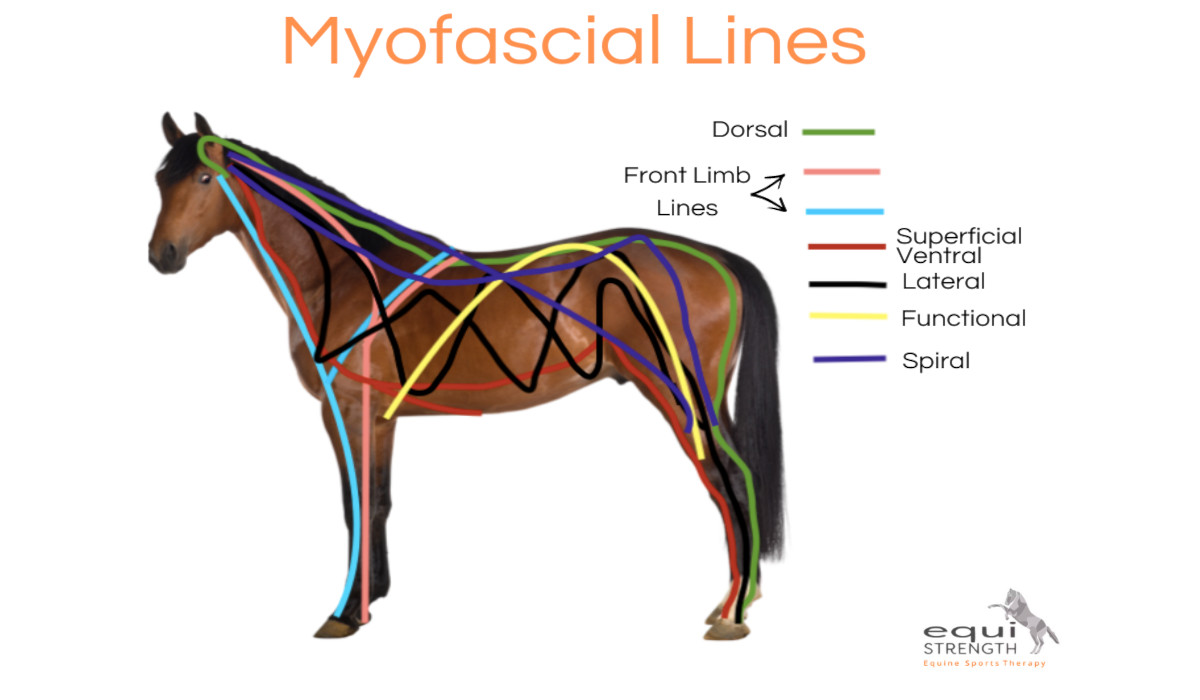
Understanding Myofascial Lines
The term “myofascial” refers to the relationship between muscle (myo) and fascia, the connective tissue that surrounds and supports every muscle, tendon, and organ in the body. In horses, fascia links muscle groups across joints and over long distances—for example, from the poll to the tail or from the hind legs to the forelimbs.
Renowned equine bodywork models such as the Anatomy Trains Myofascial Meridians have helped us better understand these lines and how they influence movement, posture, and compensation patterns. In therapy, these lines become vital pathways to follow—not only to relieve pain but to address the root cause of dysfunction.
Why Restrictions Happen
Fascial restrictions often result from:
- Repetitive movement patterns
- Ill-fitting tack or equipment
- Injury or trauma
- Inactivity or poor posture
- Emotional stress stored in the body
Over time, these restrictions cause tightness, limited range of motion, and uneven gait. A horse may begin to trip more often, have trouble picking up a lead, or resist certain maneuvers—not due to stubbornness, but because their fascia is locked down.
How Myofascial Work Helps
During a session, a bodywork practitioner will assess the horse’s posture, movement, and muscle tone, then apply gentle pressure and specific techniques along the affected lines. The goal is to:
- Release fascial adhesions
- Rehydrate and soften tissue
- Restore elasticity and glide between muscle layers
- Encourage full-body integration and balance
What makes myofascial work so powerful is that it treats the entire body, not just the area of complaint. For example, if a horse has a stiff right shoulder, the issue may actually originate from tightness in the left hindquarter or pelvis. By treating the whole fascial chain, we help the body find its natural alignment again.
Signs Your Horse May Benefit from Myofascial Therapy:
- “Off” movement or unexplained lameness
- Stiffness or shortened stride
- Behavioral resistance under saddle
- Uneven muscle development
- General tension, irritability, or anxiety
This therapy is ideal for:
- Active performance horses looking to maintain optimal movement
- Rehabilitation cases needing gentle, full-body support
- Older horses losing flexibility and coordination
- Trail or pleasure horses with lingering stiffness
The Long-Term Value
Myofascial therapy is gentle, non-invasive, and highly effective for both acute and chronic conditions. The changes may be subtle at first, but over time horses show:
- Increased range of motion
- Softer, more fluid movement
- Calmer demeanor
- Fewer injuries due to better muscle coordination
Because fascia also holds emotional tension, many horses become visibly relaxed during treatment—licking, yawning, or even falling asleep. This release supports both physical and emotional well-being, helping horses feel safe, balanced, and pain-free.
Treat the Whole Horse
When we work with myofascial lines, we’re not chasing symptoms—we’re unlocking the body’s full potential. For equine athletes and companions alike, this approach helps prevent injury, improve performance, and support long-term wellness.
If your horse feels “off” and traditional approaches haven’t helped, myofascial bodywork could be the missing piece.
Contact Pain And Wellness Solutions to book a consultation.