
When we look at a horse, we often admire their strength, grace, and powerful movement. But what keeps their large, complex bodies in balance isn’t just muscle or bone—it’s something deeper: tensegrity.
Tensegrity, short for tensional integrity, is a concept borrowed from architecture and biology. It refers to the way structures maintain stability and shape through a balance of tension and compression. In the equine body, this principle plays a crucial role in how horses move, adapt, and stay sound.
🧬 What Is Tensegrity?
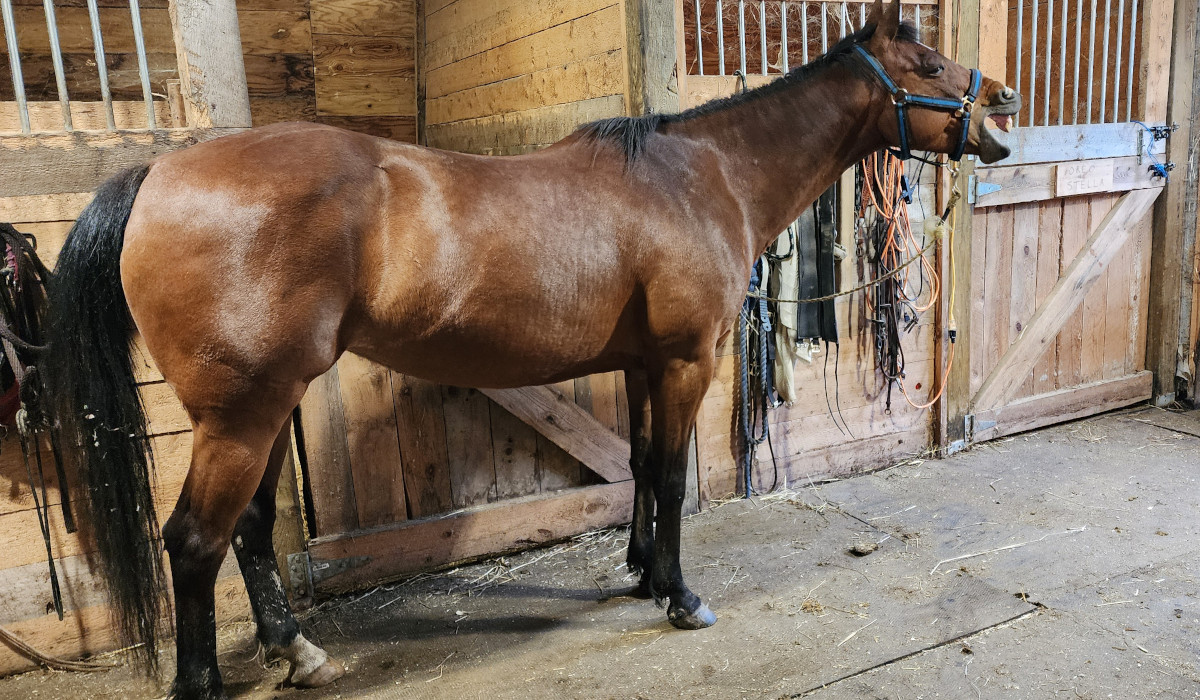
Imagine the horse’s body not as a stack of bones holding everything up, but as a floating system of bones suspended within a web of tension—created by fascia, ligaments, tendons, and muscles. The bones provide internal compression, while the connective tissues create tension to keep everything upright and integrated.
This balance means that no one part of the horse’s body works in isolation. A change in tension in one area affects the entire system. For example, tightness in the poll may create compensatory strain in the hindquarters, or imbalance in a hoof may travel up to the shoulder or neck.
Understanding this interconnected system is key to addressing chronic movement issues, postural imbalances, and pain.
⚠️ When Tensegrity Is Disrupted
The equine tensegrity model can be disturbed by:
- Repetitive training patterns or poor conditioning
- Trauma or surgery
- Ill-fitting tack or asymmetrical rider posture
- Emotional stress and nervous system tension
When this balance is thrown off, horses may exhibit signs like:
- Uneven weight-bearing
- Crookedness in movement or posture
- Recurring lameness or soreness
- Difficulty maintaining balance or rhythm under saddle
These aren’t just muscular problems—they’re signs that the whole system is out of sync.
💡 Why It Matters in Bodywork
Therapies that consider tensegrity don’t focus solely on isolated muscles or joints. Instead, they aim to restore whole-body balance by relieving tension in key fascial structures and encouraging better integration.
At Pain & Wellness Solutions, we use techniques like:
- Bowen Therapy – Gentle rolling movements that reset neuromuscular signals and allow the body to find a more efficient posture.
- Myoskeletal Alignment – Targets deep muscle chains to release structural tension and improve alignment.
- Myofascial Line Work – Follows specific fascial chains to correct imbalances from head to hoof.
- Tuning Fork Vibration Therapy – Helps re-regulate tissue tone and balance the fascia using sound frequency.
By treating the body as a tensegrity system, we work with—not against—the horse’s natural mechanics.
🐎 Benefits of Tensegrity-Focused Therapy:
- More symmetrical posture
- Improved gait, stride length, and coordination
- Fewer recurring injuries due to better load distribution
- Calmer, more responsive attitude under saddle
- Longer-lasting results compared to localized treatments
🔄 A Holistic Way of Thinking
When we approach equine wellness through the lens of tensegrity, we shift from treating symptoms to treating systems. We understand that the body is not made of disconnected parts but is instead a unified, dynamic structure.
This is especially important for:
- Performance horses with demanding athletic schedules
- Rehabilitation cases recovering from injury or trauma
- Aging horses showing signs of structural fatigue
- Sensitive horses who react strongly to touch or environmental change
Many horses begin to move more freely, stand more evenly, and relax more deeply after receiving therapies that honor this principle.
Contact Pain And Wellness Solutions to book a consultation.